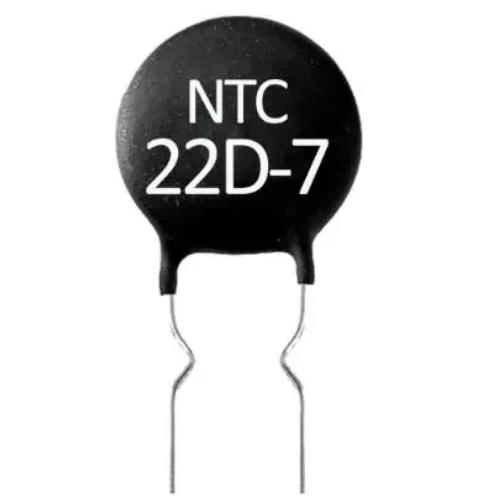
An NTC thermistor, or Negative Temperature Coefficient thermistor, is a type of resistor whose resistance decreases as its temperature increases. It plays an essential role in various electronic devices, offering reliable temperature sensing, control, and protection. These thermistors are widely used in applications such as temperature measurement, current limiting, and overcurrent protection. Their versatility and precise temperature-dependent resistance behavior make them a key component in modern electronics, automotive systems, and industrial machinery.
This article delves into how NTC thermistors work, their applications, and how to select the right one for your specific needs.
1. Understanding the Basics of NTC Thermistors
1.1 Definition of NTC Thermistor
An NTC thermistor is a type of thermistor that exhibits a negative temperature coefficient. This means that as the temperature of the thermistor increases, its electrical resistance decreases. The degree to which the resistance decreases varies depending on the material used and the temperature range.
NTC thermistors are made from a combination of metal oxide materials, usually a ceramic compound. The resistive material is fabricated in various forms, such as beads, disks, or surface-mount types, depending on the intended use.
1.2 Basic Structure of an NTC Thermistor
The basic structure of an NTC thermistor consists of two main components:
Thermistor Material: This is typically a metal oxide ceramic, such as manganese, cobalt, or nickel oxides. The specific formulation of these materials affects the thermistor's resistance properties.
Leads or Surface Mount Pads: The electrical leads connect the thermistor to the rest of the circuit. In surface-mount thermistors (SMD), these pads allow for automated placement on a circuit board.
The combination of materials and structure results in a device with temperature-dependent resistance characteristics, enabling precise temperature measurements and control.
2. How NTC Thermistors Work
2.1 Temperature and Resistance Relationship
The relationship between temperature and resistance in an NTC thermistor is governed by the exponential law. As the temperature rises, the thermal energy causes more free charge carriers to move through the material, reducing its resistance. This phenomenon is opposite to most materials, where resistance typically increases with temperature.
The resistance of an NTC thermistor can be described by the following equation:
R(T)=R0×exp(B/T)
Where:
R(T) is the resistance at temperature T
R0 is the resistance at a reference temperature
B is a constant specific to the thermistor material
T is the temperature in Kelvin.
This equation shows that as T increases, R(T) decreases, leading to the unique property of NTC thermistors.
2.2 Mechanism Behind NTC Thermistor's Response
When an NTC thermistor is exposed to a temperature change, the material's conductivity changes due to the movement of charge carriers (electrons). At higher temperatures, more charge carriers become available, which results in reduced resistance. This makes NTC thermistors particularly suitable for temperature-sensing applications.
The thermistor’s response curve is highly sensitive, meaning small changes in temperature can cause noticeable changes in resistance. This property makes NTC thermistors ideal for use in precision temperature measurement and control systems.
2.3 The Mathematical Expression for Resistance and Temperature
As mentioned earlier, the temperature-resistance relationship can be mathematically modeled using the Steinhart-Hart equation, which is more accurate for wide temperature ranges:
1/T=A+Bln(R)+C(ln(R))3
Where:
T is the temperature in Kelvin
R is the resistance
A, B, C are constants determined experimentally
This equation allows for precise calibration of thermistors across a wide range of temperatures and resistances, ensuring accuracy in sensitive applications.
3. Applications of NTC Thermistors
3.1 Temperature Sensing and Control
NTC thermistors are extensively used in temperature sensing applications. Their ability to change resistance with temperature makes them perfect for use in thermometers and temperature sensors. The accuracy of an NTC thermistor allows for highly reliable temperature measurements in a variety of industries, such as:
Household appliances: NTC thermistors are used in refrigerators, air conditioners, and ovens to regulate internal temperatures.
Industrial equipment: NTC thermistors help maintain optimal temperatures in machinery and process control.
These sensors can be placed directly in the environment being monitored to provide real-time data, or they can be embedded into systems that automatically adjust based on temperature readings.
3.2 Overcurrent Protection
NTC thermistors are also used in overcurrent protection circuits. When the current flowing through a circuit increases, the thermistor heats up and its resistance decreases. This reduction in resistance helps to limit the current, preventing damage to the rest of the system. NTC thermistors are especially useful in power supplies, batteries, and other devices where protection from excess current is essential.
NTC thermistors are often used in power converters, motor drives, and battery management systems to prevent excessive heat buildup and ensure safe operation.
3.3 Automotive and Industrial Applications
In the automotive industry, NTC thermistors play a critical role in engine temperature sensors, helping to manage engine cooling systems and preventing overheating. They are also used in battery temperature monitoring to ensure safe operation.
In industrial automation, NTC thermistors are used for temperature monitoring in manufacturing processes, ensuring that machines run at optimal temperatures and avoiding overheating that could lead to equipment failure.
![NTC Thermistor]()
4. Types of NTC Thermistors
4.1 Disk-type vs. Radial Leaded Thermistors
NTC thermistors are available in different physical formats. The two common types are:
Disk-type thermistors: These thermistors are flat and disk-shaped, often used in circuits where space is not a critical concern. They offer good thermal response and are typically used in power supply applications.
Radial leaded thermistors: These have leads that extend from both sides of the thermistor, and are used in applications where the thermistor needs to be easily integrated into through-hole designs.
4.2 Surface Mount Devices (SMD) vs. Through-Hole Devices
Another distinction in NTC thermistors is between surface-mount (SMD) devices and through-hole components:
Surface Mount Devices (SMD): These are used in compact electronic designs, especially for high-density circuit boards. They are smaller and more cost-effective for large-scale manufacturing.
Through-Hole Devices: These thermistors are larger and are typically used in applications that require more mechanical strength or when integration into larger components is necessary.
Here’s a comparison table summarizing the differences:
Feature | SMD Thermistors | Radial Leaded Thermistors |
Size | Smaller, compact | Larger and bulkier |
Mounting Style | Surface mounting | Through-hole mounting |
Cost | More cost-effective for high volume | Typically more expensive |
Durability | Less mechanical strength | Higher mechanical strength |
Application | Ideal for compact designs | Ideal for power and automotive use |
5. Benefits of Using NTC Thermistors
NTC thermistors offer several benefits that make them a preferred choice for many temperature-related applications:
High Sensitivity: NTC thermistors are highly sensitive to temperature changes, making them ideal for applications where precision is crucial.
Cost-Effectiveness: Compared to other temperature sensing devices, NTC thermistors are relatively inexpensive, especially for high-volume applications.
Long Lifespan: Due to their robust ceramic construction, NTC thermistors have a long operational life and can withstand a range of environmental conditions without degrading.
Stable Performance: Even under varying environmental conditions, NTC thermistors offer stable, reliable temperature readings.
6. Choosing the Right NTC Thermistor
6.1 Key Considerations for Selection
When selecting an NTC thermistor for a particular application, several factors must be considered:
Resistance at Reference Temperature: This determines the thermistor's baseline resistance. A typical value is 10kΩ at 25°C.
B-Value: The B-value is a constant that indicates the steepness of the thermistor’s temperature-resistance curve. Higher B-values typically provide more sensitivity to temperature changes.
Temperature Range: Consider the temperature range your application will operate within. Different thermistors are designed for high or low-temperature environments.
6.2 Matching Thermistor Characteristics to Application Needs
To select the best thermistor for your needs, ensure that its resistance, temperature range, and response characteristics align with the requirements of your circuit or device. For example, a power supply might require a thermistor with a low B-value for quick thermal response, while an automotive engine sensor might need a higher B-value for precise control.
7. Conclusion
In conclusion, NTC thermistors are essential components in temperature sensing, control, and overcurrent protection applications. Their ability to offer high sensitivity, cost-effectiveness, and reliability makes them indispensable in industries ranging from automotive to household appliances. Whether you need a thermistor for precise temperature measurement or overcurrent protection, selecting the right NTC thermistor based on your specific needs is crucial for optimal performance.
If you are looking for high-quality NTC thermistors and expert advice on choosing the best solution for your application, we invite you to explore the range of products and services offered by our team at ShenZhen HaiWang Sensor Co., Ltd. Our extensive experience and commitment to quality ensure that you will find the ideal solution tailored to your requirements. Feel free to contact us for more information or personalized recommendations—we are here to assist you in every step of your selection process.
8. FAQ
1. What is the main difference between NTC and PTC thermistors?
NTC thermistors decrease in resistance as temperature increases, while PTC thermistors increase in resistance as temperature increases. NTC thermistors are typically used in temperature sensing and control, whereas PTC thermistors are used in overcurrent protection.
2. How accurate is an NTC thermistor in temperature measurement?
NTC thermistors are highly accurate and provide precise temperature measurements within a specific range, often offering a resolution down to tenths of a degree Celsius.
3. Can NTC thermistors be used for both high and low temperatures?
Yes, NTC thermistors are available in a wide variety of temperature ranges, from sub-zero to very high temperatures, depending on the material used in their construction.
4. How do I choose the correct NTC thermistor for my application?
Consider factors such as resistance at reference temperature, the B-value, temperature range, and the specific application requirements such as response time and accuracy.
5. Are NTC thermistors sensitive to environmental changes?
Yes, NTC thermistors can be sensitive to environmental factors like humidity and pressure. However, they are designed to provide stable performance within their specified operating range.