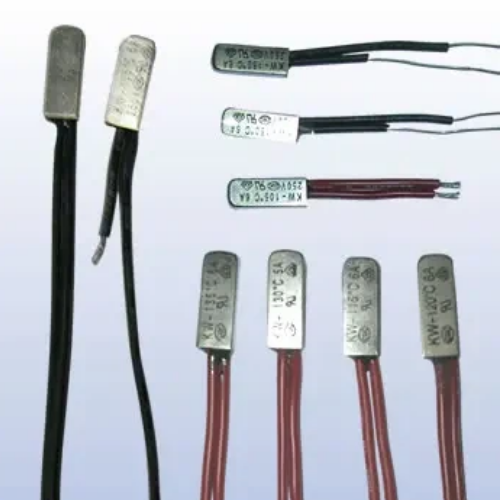
Thermistors are essential components in modern electronics, widely used in temperature sensing, circuit protection, and compensation applications. Whether you are designing a circuit or diagnosing a fault, knowing whether the thermistor in use is NTC (Negative Temperature Coefficient) or PTC (Positive Temperature Coefficient) is crucial for its proper integration. In this article, we’ll explore in depth how to differentiate between NTC and PTC thermistors, how they operate, and where they are commonly applied.
Understanding Thermistors
A thermistor is a type of resistor whose resistance changes significantly with temperature. The term "thermistor" is derived from "thermal" and "resistor," reflecting the fact that it is a temperature-sensitive resistor. Thermistors are vital in a range of electronic devices, where temperature needs to be monitored and controlled precisely. The behavior of thermistors is classified into two categories based on the way their resistance responds to temperature changes:
NTC Thermistors: These thermistors exhibit a decrease in resistance as the temperature increases. The negative relationship between temperature and resistance makes them ideal for use in temperature sensors and compensation circuits.
PTC Thermistors: These thermistors show an increase in resistance as the temperature rises. The positive relationship between temperature and resistance makes PTC thermistors well-suited for applications where overcurrent protection and thermal regulation are required.
Understanding these two types of thermistors and how they behave in various temperature conditions is essential for selecting the appropriate thermistor for specific applications. Below, we will dive deeper into the individual characteristics of NTC and PTC thermistors, and then explore the methods to distinguish between them.
What Is an NTC Thermistor?
Definition and Basic Functionality
An NTC Thermistor (Negative Temperature Coefficient Thermistor) is a type of thermistor in which the resistance decreases as the temperature increases. This negative correlation between temperature and resistance makes NTC thermistors extremely useful for measuring temperature accurately in circuits. The main feature of NTC thermistors is that they are highly sensitive to temperature changes, meaning they can detect small temperature variations effectively.
How NTC Thermistors Work
NTC thermistors are made from semiconductor materials such as metal oxides, which exhibit a decrease in resistance as the temperature rises. This occurs because, at higher temperatures, more charge carriers (electrons or holes) become available in the material, allowing more current to pass through. As a result, the resistance of the thermistor falls.
This property is particularly useful for applications where precise temperature measurements are required. NTC thermistors can be used to monitor temperatures within a narrow range and are commonly found in power supplies, battery packs, and environmental monitoring devices.
Key Features of NTC Thermistors:
Negative Temperature Coefficient: The primary feature of NTC thermistors is their negative temperature coefficient, where the resistance decreases as temperature rises.
Fast Response Time: NTC thermistors respond quickly to temperature changes, making them ideal for dynamic environments where temperature fluctuates frequently.
High Sensitivity: These thermistors are highly sensitive to even minor temperature changes, making them ideal for precision temperature sensing.
Due to these characteristics, NTC thermistors are commonly used in applications requiring accurate temperature measurements and compensation.
What Is a PTC Thermistor?
Definition and Basic Functionality
A PTC Thermistor (Positive Temperature Coefficient Thermistor) is a type of thermistor in which the resistance increases as the temperature rises. This positive correlation between temperature and resistance is opposite to that of an NTC thermistor. PTC thermistors are primarily used for applications where it is important to regulate or limit the flow of current when the temperature exceeds a certain threshold, effectively preventing overheating or overcurrent conditions.
How PTC Thermistors Work
The resistance of PTC thermistors increases significantly as the temperature rises. At a certain temperature threshold, the resistance increases rapidly, limiting the current flow through the thermistor. This behavior makes PTC thermistors excellent for overcurrent protection, circuit resetting, and self-regulating temperature control.
The material used in PTC thermistors typically undergoes a phase transition at the critical temperature, where the resistance increases sharply. This makes PTC thermistors highly effective at limiting excessive current, thus protecting sensitive components in circuits from damage.
Key Features of PTC Thermistors:
Positive Temperature Coefficient: The resistance of PTC thermistors increases as the temperature increases.
Self-regulation: PTC thermistors can act as self-resetting circuit protection devices. When the temperature drops, their resistance decreases, allowing current to flow again.
Current Limiting: Once the critical temperature is reached, PTC thermistors limit the current flow, effectively preventing circuit damage from overheating.
This ability to self-regulate and limit current makes PTC thermistors ideal for thermal protection and current-limiting applications.
![NTC Thermistor]()
Key Differences Between NTC and PTC Thermistors
NTC vs. PTC: Resistance vs. Temperature
To better understand the differences between NTC and PTC thermistors, let’s look at the comparison table below:
Feature | NTC Thermistor | PTC Thermistor |
Resistance Behavior | Resistance decreases as temperature increases | Resistance increases as temperature increases |
Common Application | Temperature sensing, circuit protection, temperature compensation | Overcurrent protection, thermal protection, circuit reset |
Response to Temperature | High sensitivity, quick response | Self-regulation, current limiting after threshold temperature |
Operational Range | Effective at lower temperatures | Effective at higher temperatures where overcurrent protection is needed |
Sensitivity | Highly sensitive to small temperature changes | Less sensitive to small temperature changes, used for safety purposes |
This table clearly illustrates the primary distinctions between NTC and PTC thermistors, making it easier to understand their behavior and application differences.
How to Tell If a Thermistor Is NTC or PTC
Visual Inspection
The first and easiest way to identify whether a thermistor is NTC or PTC is to look for identifying markings, part numbers, or datasheets. Manufacturers often provide part numbers on the thermistor’s packaging or body. Checking the datasheet associated with the thermistor will quickly tell you whether it is an NTC or PTC thermistor. However, in the absence of clear markings or datasheets, you can proceed to other testing methods.
Measuring the Resistance Change
One of the simplest ways to identify a thermistor’s type is by measuring the resistance at different temperatures:
Step 1: Measure the thermistor's resistance at room temperature using a multimeter.
Step 2: Gradually heat the thermistor by applying a heat source or by immersing it in hot water. Observe how the resistance changes.
NTC Thermistor: The resistance will decrease as the temperature increases.
PTC Thermistor: The resistance will increase as the temperature increases.
This simple test helps you identify whether the thermistor is NTC or PTC based on its temperature-resistance characteristic.
Temperature Response Testing
For more accuracy, perform a temperature response test by placing the thermistor in a temperature-controlled environment or by using a heat source (such as a heat gun or warm water):
NTC Thermistor: As the temperature increases, the resistance decreases.
PTC Thermistor: As the temperature increases, the resistance increases.
By closely monitoring the thermistor's behavior at various temperature points, you can confirm whether it is an NTC or PTC thermistor.
Applications of NTC Thermistors
NTC thermistors are widely used in applications where precise temperature control and monitoring are critical. Below are some common applications of NTC thermistors:
Temperature Sensing and Control
Power Supplies: NTC thermistors are commonly used to monitor and regulate the temperature within power supply units, ensuring the system does not overheat and operates within safe temperature ranges.
Home Appliances: Many home appliances like refrigerators, air conditioners, and microwaves rely on NTC thermistors to control internal temperatures, enhancing efficiency and safety.
Battery Management Systems: NTC thermistors help in monitoring battery temperature to prevent overheating and to maintain battery performance.
Temperature Compensation
NTC thermistors are widely used in circuits to compensate for temperature-induced variations in the performance of other components. They help stabilize the system, ensuring consistent functionality despite changes in the ambient temperature.
Conclusion
In conclusion, understanding the differences between NTC and PTC thermistors is essential for selecting the right component for your application. NTC thermistors are ideal for precise temperature sensing and compensation, offering high sensitivity and fast response times. On the other hand, PTC thermistors excel in overcurrent protection and self-regulation, making them the go-to choice for applications requiring thermal safety features. By applying the testing methods outlined in this article, you can easily distinguish between these two types of thermistors and ensure the correct implementation in your systems.
At ShenZhen HaiWang Sensor Co., Ltd., we specialize in providing high-quality thermistors, including both NTC and PTC types, tailored to meet the needs of various industries. Our expertise in thermistor technology allows us to offer customized solutions for temperature sensing, circuit protection, and more. If you’re looking for reliable thermistors or need further guidance on which type is best for your application, we invite you to contact us for professional advice and support. Our team is here to assist you in making the right choice for your project’s success.
FAQ
1. How can I test a thermistor at home to determine if it's NTC or PTC?
To test a thermistor, measure its resistance at room temperature and then heat it using a controlled heat source. If the resistance decreases as the temperature rises, it is an NTC thermistor. If the resistance increases, it is a PTC thermistor.
2. What types of thermistors are most commonly used in consumer electronics?
In consumer electronics, NTC thermistors are commonly used for temperature sensing and circuit protection. They are often found in power supplies, battery management systems, and home appliances.
3. Are there other types of thermistors besides NTC and PTC?
Yes, besides NTC and PTC thermistors, there are also NTC/PTC hybrid thermistors and RTDs (Resistance Temperature Detectors), which are used in specific high-precision temperature sensing applications.
4. Can I use an NTC thermistor for circuit protection?
While NTC thermistors can be used for some level of circuit protection, they are more commonly employed for temperature sensing and compensation. For overcurrent protection, PTC thermistors are typically a better choice due to their ability to limit current flow and reset after cooling.