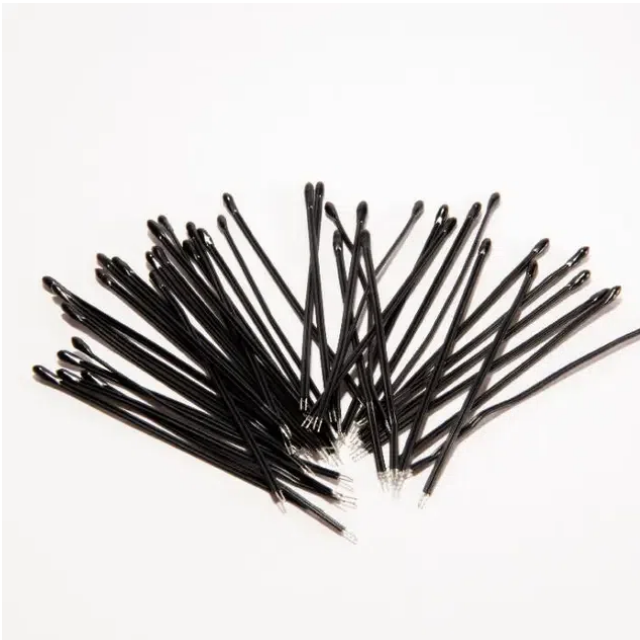
In industrial environments, precision and reliability are not optional—they are essential for efficiency, safety, and process control. Among the various components that support these goals, the thermistor sensor plays a quiet but critical role. Whether used in power systems, manufacturing equipment, or thermal protection circuits, thermistor sensors deliver real-time temperature data that helps prevent failures and optimize performance. With over 20 years of expertise, ShenZhen HaiWang Sensor Co., Ltd. & HW INDUSTRIAL CO., LTD offers robust thermistor solutions specifically designed for the demanding conditions of industrial applications.
How Thermistor Sensors Work in Industry
A thermistor sensor is a temperature-dependent resistor that changes its electrical resistance based on ambient temperature. In industrial settings, thermistors are typically chosen for their sensitivity, compact size, and cost-effectiveness, allowing them to be integrated into complex systems without sacrificing accuracy or space.
There are two main types:
NTC (Negative Temperature Coefficient) thermistors: Resistance decreases as temperature increases. These are widely used in monitoring and control systems for precise temperature tracking.
PTC (Positive Temperature Coefficient) thermistors: Resistance increases with temperature. These are used in overtemperature protection and self-regulating heating elements.
Thermistors provide continuous feedback with minimal delay, allowing systems to respond instantly to temperature changes. In contrast to slower analog gauges or less sensitive digital sensors, thermistor sensors offer high responsiveness within tightly controlled temperature bands, a quality that is especially valuable in industrial automation and thermal management.
Which Types Serve Which Purposes?
Industrial processes are highly diverse, and the same goes for thermistor designs. Selecting the right thermistor form factor is essential for performance and reliability.
Bead Thermistors
Bead thermistors are the smallest type and offer very fast response times. They are ideal for tight spaces and fast-switching systems, such as inside circuit boards or electronic control modules. Due to their fragile structure, they are usually encapsulated for industrial use.
Probe-Type Thermistors
Probe thermistors consist of a thermistor element enclosed in a metal or plastic housing. They are used when the sensor must be inserted into tanks, ducts, or machinery. These are ideal for industrial heating, cooling systems, and fluid monitoring applications, where ruggedness and durability are important.
Packaged and Epoxy-Coated Thermistors
For harsh environments where moisture, dust, and vibration are present, epoxy-coated thermistors or fully packaged units are recommended. These are often found in motors, power converters, and compressors, where consistent thermal monitoring is necessary over long periods.
At ShenZhen HaiWang Sensor Co., Ltd. & HW INDUSTRIAL CO., LTD, we provide a wide range of thermistor sensor types, from simple bead sensors to custom-molded assemblies for direct integration into high-precision machinery.
Core Industrial Applications
Thermistor sensors are indispensable in many sectors, offering real-time insights that help reduce downtime, prevent equipment damage, and ensure compliance with safety regulations. Below are some of the most common applications.
Equipment Temperature Monitoring
Machinery such as generators, motors, and transformers generate heat during operation. Thermistor sensors are installed in or near critical components to monitor temperature rise and prevent overheating. These readings are used to trigger cooling systems or system shutdowns before any damage occurs.
Process Control Systems
In sectors like chemical production, food processing, and pharmaceuticals, precise temperature control is necessary to ensure product quality and safety. Thermistor sensors embedded in processing equipment deliver immediate thermal feedback, enabling operators to maintain tight tolerances.
Overtemperature Protection
PTC thermistors are used as resettable overtemperature protectors in electronic control units, motor drives, and industrial chargers. When a system overheats, the PTC thermistor increases in resistance and reduces current flow, preventing component damage and fire hazards.
Fluid and Gas Temperature Measurement
Industrial boilers, heat exchangers, and HVAC systems rely on thermistor sensors to measure the temperature of fluids and gases. Accurate readings are essential for maintaining energy efficiency and system integrity. Probe-type thermistors are commonly used in these applications.
Battery and Power System Management
With the rise of renewable energy and industrial battery storage systems, thermistors are now critical in battery temperature monitoring. This ensures batteries operate within safe temperature limits, improving longevity and preventing thermal runaway.
Environmental Monitoring
In environments where air quality and climate control are critical—such as data centers, server rooms, and cleanrooms—thermistor sensors provide constant feedback for heating, ventilation, and air conditioning systems. Their fast response time helps systems adapt quickly to external or internal changes.
Thermistor sensors from ShenZhen HaiWang Sensor Co., Ltd. & HW INDUSTRIAL CO., LTD are already supporting customers in these sectors with proven reliability, long-term stability, and compliance with international quality standards.
Benefits vs Other Sensors
While other temperature sensors like RTDs and thermocouples are also used in industry, thermistors offer unique advantages that make them highly competitive, particularly in targeted applications.
Cost Efficiency
Thermistors are significantly more affordable than RTDs or thermocouples, especially when deployed in large numbers. For large-scale industrial systems with multiple temperature control points, the cost savings can be substantial.
High Precision in Narrow Ranges
Thermistors are incredibly precise over limited temperature spans, making them ideal for applications where accuracy in a specific operating range is critical—such as in heating systems or battery management.
Compact and Versatile
Thermistors are smaller and more flexible than RTDs, enabling integration into smaller devices and spaces. This compact size also contributes to faster thermal response and lower thermal mass, improving accuracy and efficiency.
Low Power Requirements
Unlike IC-based sensors that may require power conditioning, thermistors are passive components that consume minimal power, reducing system complexity and energy use.
Although RTDs may offer better linearity over a wider temperature range, and thermocouples are ideal for extreme temperatures, thermistors remain the optimal solution for mid-range, precision-focused, cost-sensitive applications in the industrial sector.
Customization for Process Environments
Every industrial environment presents unique challenges—high temperatures, corrosive chemicals, electromagnetic interference, or constant vibration. That’s why customization is essential.
At ShenZhen HaiWang Sensor Co., Ltd. & HW INDUSTRIAL CO., LTD, we offer thermistor sensors customized to your specific industrial process needs, including:
Wide Operating Temperatures
Our sensors are built to operate reliably from -55°C to +250°C, covering a wide range of applications from cold storage systems to high-temperature reactors.
Rugged Housing
We provide metal, Teflon-coated, ceramic, and epoxy housing options to ensure your sensors withstand aggressive conditions without degradation. Whether your environment is dusty, wet, corrosive, or vibration-prone, we can supply a thermistor that lasts.
Custom Resistance Values and Tolerances
To ensure seamless integration with your control systems, we offer customizable resistance values (e.g., 10kΩ, 100kΩ) and beta curves. This allows for plug-and-play compatibility and enhanced system accuracy.
Specialized Connector and Cable Options
We support a wide variety of cable lengths, insulation materials (such as silicone, PTFE, PVC), and terminal connectors (Molex, JST, screw terminals), enabling easy installation and long-term reliability in diverse setups.
With our engineering expertise and flexible manufacturing capabilities, we can deliver thermistor sensors that perform exactly as needed, regardless of how tough the conditions are.

Conclusion
The thermistor sensor continues to prove its value across a wide spectrum of industrial processes—from precision heating and cooling control to safety systems and battery management. Its fast response, reliability, and customizability make it one of the most versatile components in modern industrial design.
At ShenZhen HaiWang Sensor Co., Ltd. & HW INDUSTRIAL CO., LTD, we take pride in manufacturing thermistor sensors that meet the highest standards for durability and precision. Whether you’re designing new industrial machinery or upgrading your control systems, our sensor solutions are tailored to support your exact needs.
Contact us today to learn how our industrial-grade thermistor sensors can improve the performance, safety, and efficiency of your processes.